Wednesday, March 26, 2014

read: Apocalypse: A Novel (3 stars)

Apocalypse: A NovelApocalypse: A Novel by Dean Crawford
My rating: 3 of 5 stars

At its core, a techno-thriller needs three things: a high concept (technology or device de jour), an irresistible force (the villain and his scheme) and an immovable object (the hero and his convictions). All three have to be believable to make the book hold together. The rest -- characters, plot, settings and writing -- are what make the book enjoyable. Dean Crawford's "Apocalypse" has all of the above, in various measures, and turns out to be a reasonably enjoyable read.

The device de jour in this case has something to do with time travel, and it takes pretty much the first half of the novel to get any kind of traction into what that's about. The latter half of the novel continues to ruminate on this concept, pretending to go into details (though sometimes contradicting itself) about how that might be accomplished. It's a high concept alright, and tons of fun (until someone gets hurt), and complete hogwash if you think about it hard enough.

The irresistible force in this case is Joaquin Abell, who the world sees as a philanthropist. But whose true motivations, of course, turn out to be questionable at best. He plans to use the time travel technology for the betterment of mankind. The problem is that he isn't all that interested in what mankind has to say about the matter or how many casualties there are along the way.

The immovable object is Ethan Warner (and his partner Nicola Lopez) a freelance private investigator with government ties and a suitably unfortunate background that is alluded to from time to time, but doesn't affect the enjoyment of the current situation. They're brought in when one of Abell's scientists is suspected of killing his own family, but calls the police himself and causes quite a stir when he seems to accurately predict the future. He inexplicably insists that they call in Warner to get to the bottom of things.

What works: The time travel concept is presented with just enough hand-waving to make it seem plausible enough for the purposes of the story. It is used to good effect to create an intricate plot that mostly holds together over the course of the story. There are no egregious bouts of info-dump to spoil the pacing. Just a few pages here and there that could have been pared down a bit more. The large cast of characters is well wrought and well used, though I think there are a few too many. The fight and battle scenes are pretty detailed and realistic.

What didn't work: I think both the character problem (which led to a few pacing issues) and some glaring issues I have with the author's prose could have been remedied by a couple more ruthless rounds of editing. There are some turns of phrase that are repeated, paragraph after paragraph, page after page, as the author keeps trying to string together too many thoughts into a single sentence. And as he stumbles his way in and out of situations, instead of just letting them transpire. To top it off, there is a glaring violation of the story's own rules about how time travel works. For a page or two, I thought the writer was going to turn it into a certain kind of plot twist, but instead he blundered right into and through it, and left it lying there, ignored, as he wrapped things up. Oh well, it wouldn't be a time travel story without a paradox of causality.

All the good stuff adds up to at least a four-star novel. Some rigorous editing would have gotten it there. With one star knocked off for the bad stuff, this is still an enjoyable three-star book. It's definitely something to read on the plane or beach this summer.

Disclosure: I received a free copy of this book for review.

View all my reviews on Goodreads

read: A Certain Ambiguity: A Mathematical Novel (3 stars)

A Certain Ambiguity: A Mathematical NovelA Certain Ambiguity: A Mathematical Novel by Gaurav Suri
My rating: 3 of 5 stars

This is another book I had high hopes for, based on the blurb and the recommendation of a friend. It has math. It has philosophy. Since those subjects both interest me, it sounded full of potential. But I wound up disappointed. I was so disappointed, I almost didn't finish the book.

My main disappointment is with the plot, which was paper-thin and obvious from the beginning. There's this guy and he, through a few quickly dispensed situations, winds up in college with graduation day approaching. A series of unconvincing events puts him in a class that is part math class, part philosophy discussion. He makes new friends. He meets a girl. Already you know that they will discuss math. They will discuss philosophy. He might get involved with the girl.

So they do all that. The author tries to make things more interesting by adding the sudden discovery that the guy's beloved grandfather spent time in jail and so he has to research that, too. But all that plot description makes it sound more interesting than it really is, because that takes up about 25% of the words in the book. The other 75% is taken up with endless dialogs about math and philosophy, either presented in the classroom, or a jail cell (while a judge and the grandfather work through the motivations for the grandfathers 'objectionable' behavior), or at various contrived situations around campus.

At various points the endless dialog, which is always in language far to lofty to come out of ordinary, human mouths, is broken up by fictionalized letters and journal entries from historical mathematicians and philosophers. These are also written in language either too lofty or too modern to be based in reality. The contrived and awkward situations, discussions and documents all kept me from connecting with the story and characters and really enjoying the ride.

This book would be improved by either ditching the 'novel' portion or making it stronger. As it is, the math exposition, while interesting and central to the theme, overwhelm the fiction.

The only reason this gets 3 stars, rather than 2, is because of the intriguing subjects. It did get me to thinking deep thoughts, which I believe was the point of it. But the lack of personal connection and the awkwardly scholarly language kept it from approaching 4 stars. Only recommended if you like math (or are unoffended by it) and are likewise unoffended by flowery dialog and thoughts that do not reflect the way real people behave.

View all my reviews on Goodreads

Sunday, February 23, 2014

read: Pacific Rim: Tales from Year Zero (4 stars)

Pacific Rim: Tales From Year ZeroPacific Rim: Tales From Year Zero by Travis Beacham
My rating: 4 of 5 stars

Fun preface to the blockbuster movie. Gives a little context to the strange world of Kaiju and Jaegers.

View all my reviews on Goodreads

Wednesday, February 12, 2014

read: Lamb: The Gospel According to Biff, Christ's Childhood Pal (4 stars)

Lamb: The Gospel According to Biff, Christ's Childhood Pal Lamb: The Gospel According to Biff, Christ's Childhood Pal by Christopher Moore
My rating: 4 of 5 stars

This book fooled me (in a good way). Having not previously read anything by Christopher Moore, my expectations were entirely set by the title, the blurb, and the recommendation of a friend. I thought for sure that it would be nothing but throw-away zingers on the order of Monty Python or Douglas Adams (or even Harvard Lampoon), that any historical and religious reality would be right out the window, and that any resemblance to the life of the Biblical Jesus Christ would be entirely coincidental. I was (mostly) wrong on all counts.

There are plenty of zingers. But usually not in the set 'em up and knock 'em down one-liner style of Python or Lampoon. The humor here is usually more subtle, between the lines. I'm sure (as evidenced by other reviewers) that one can enjoy the stories and jokes at face value. But readers that can bring a deeper understanding of history and culture will catch and enjoy oh so many more twisted references to both ancient and modern culture.

Don't get me wrong. This is not a history book. The author confesses as much in a much appreciated Afterward. This is a story. But the author did do his research and tries to keep things real, even as he's stretching the truth and warping time to make things funny. It's also not a religious book. Nope, it's pretty profane. And also vulgar. The former is probably necessary for the humor. You don't get laughs without breaking a few rules and knocking down some icons. The latter is just for style.

To say this is an irreverent portrayal of the life of Christ would be an understatement. But the undocumented years of the life of Jesus of Nazareth (or Joshua bar Joseph, as portrayed here) give the author a vast playground in which to play. Looking back over two thousand years, who can say what the boy was really like? The teen? Probably not the contemporary kid portrayed here. But just as unlikely is the sanitized, homogenized version that many Christians and popular culture have in their head.

To those who say that this goes too far in skewering cherished doctrine, as well as those who don't think it goes far enough in knocking down religious mythology, I say, in the words of Foghorn Leghorn, "It's a joke. I say, It's a joke, son." This is a funny story loosely based on the life of the Messiah, the Son of God. But it is a story. And it is funny. And if you choose to believe the Jesus would have never had a friend named Biff nor an almost girlfriend named Maggie, that's your choice. But I found it fun to make believe for a few for hours that they did exist and that they did enrich the life of that young man.

View all my reviews on Goodreads

Saturday, January 25, 2014

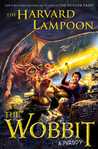
read: The Wobbit: A Parody (2 stars)

The Wobbit: A ParodyThe Wobbit: A Parody by The Harvard Lampoon
My rating: 2 of 5 stars

I really wanted to like this book. My recollections of its predecessor Bored of the Rings are of an uneven, but chuckle-filled, delight that I wanted to share with my friends. Unfortunately, this book is only uneven, sprinkled with a few smirks, and I can't recommend it.

It's a shame, really. Tolkien's books seem like a prime target for parody. As are the overblown films that Peter Jackson makes out of them (and I enjoy the heck out of both). If parody is defined as a deliberate copy done for comic effect, this book only vaguely fits the definition. All that is borrowed from the original work is a rough outline of the plot (with little comic effect) that is used to string together a hodge podge of cultural reference one-liners that don't even come close to telling a story.

A few jokes are amusing. There are some good shots at Aaron Sorkin and the walk-and-talk. Dumbledalf's conflation of the worlds of The Hobbit and Harry Potter brought a couple of smiles. Also humorous were characters like L. Ron and his disciples, the Internet Trolls (actual trolls), and the idea of Elvisking.

What didn't work at all was the character of Billy Bagboy, the obvious stand-in for Bilbo Baggins. Rather than be the charming, confused, and frightened center of the story and thoughtful representative for the reader, he was presented as an obese, lazy oaf. Without a likable character for the reader to identify with, the book counted on its jokes to drag the reader through to the end. And since most of the jokes seemed to misfire, it was a real slog to push through the whole thing.

Read the cover. Skim the first chapter or two. If you're laughing out loud, or even giggling, you might enjoy this. If not, I'm afraid it doesn't get any better and you should give this book a pass.

Disclosure: I received a free copy of this book for review.

View all my reviews on Goodreads

Wednesday, January 8, 2014

read: The Ocean At The End of the Land (4 stars)

The Ocean At The End of the LaneThe Ocean At The End of the Lane by Neil Gaiman
My rating: 4 of 5 stars

I'm glad I moved this up to the top of my reading list. Neil Gaiman is an enchanting weaver of worlds and the stories within those worlds. He is somehow able to draw upon ancient knowledge that never was and make it seem present, potent, universal and real.

It would be foolish of me to try to describe this story. You can read the cover blurb and other reviews to get a flavor of that. But those descriptions are only shadows of the experience of getting lost in these pages of lost childhood and magic. What is real? What is memory? What is imagination? What is time? These are all questions that swirl through this book and are never directly addressed or answered. Or maybe they are.

View all my reviews on Goodreads

Tuesday, January 7, 2014

read: The New Space Opera 2 (3 stars)

The New Space Opera 2: All-new stories of science fiction adventureThe New Space Opera 2: All-new stories of science fiction adventure by Gardner R. Dozois
My rating: 3 of 5 stars

I probably picked this up because I wanted to read some current short science fiction and saw that John Scalzi had an entry. Since I did not sit down and read it cover to cover, it looks like it took me about three years to get through it. As is typical for an anthology, some of the stories were pretty good, some not so much. I can't think of one that knocked my socks off. But most were worth the read.

View all my reviews on Goodreads